X-Ray and Imaging Technology
Introduction
X-ray imaging helps healthcare professionals examine structures inside the body. Producing a useful image requires the right equipment, correct patient positioning, careful communication and strict radiation-safety procedures. If you are searching for an X-Ray Technician Institute in Kolkata, it is important to understand these basics and choose training that takes safety seriously.
This guide introduces X-ray equipment, positioning, image quality and the training checks students should make. It is educational information, not permission to operate imaging equipment. X-ray equipment must only be used by appropriately qualified and authorised personnel in facilities that meet applicable regulatory requirements.
What is X-ray imaging?
X-rays are a form of ionising radiation. In medical imaging, an X-ray beam passes through the body and is detected to create an image. Different tissues absorb radiation differently, which helps create visible contrast. The image can support a clinician’s assessment when the examination is medically appropriate.
Because X-rays involve ionising radiation, imaging must be justified and performed using safe procedures. The Atomic Energy Regulatory Board (AERB) provides information about diagnostic radiology regulation and radiation safety in India. Its guidance explains that diagnostic X-ray facilities require the appropriate regulatory licence and safety arrangements.
Understanding the equipment
A diagnostic X-ray system includes an X-ray tube, control panel, image receptor or detector and supporting positioning equipment. The exact setup depends on the type of examination and whether the system is digital or uses another image-capture method. Students may learn the purpose of each component, routine checks, safe handling and how to report a fault.
Training should also explain why equipment settings must follow approved protocols. Students should not independently select or change technical factors without appropriate training and authorisation. Equipment use must follow the facility’s procedures, the examination request and radiation-protection requirements.
Patient positioning and communication
Positioning helps show the body part required by the examination. The correct position depends on the clinical request, patient condition and approved protocol. A trained operator explains the process in clear language, checks the patient’s ability to move safely and uses appropriate support where needed.
Good communication reduces confusion and may help avoid repeat imaging. Students should learn to confirm identity, follow privacy procedures, provide clear instructions and alert the supervising professional if the patient cannot safely maintain the required position. Patient dignity and comfort should be respected throughout the procedure.
What affects image quality?
Image quality can be affected by positioning, movement, exposure factors, detector alignment, equipment condition and the body part being examined. Poor positioning or movement may make an image less useful and may lead to a repeat examination. Quality checks help ensure the image meets the required standard while following radiation-protection principles.
Students should learn to recognise common technical issues and report them to the supervising professional. They should not make clinical diagnoses from images unless they hold the appropriate professional qualification and authority. The purpose of technician training is to support safe image acquisition and workflow within the defined role.
Radiation safety is essential
Radiation safety is not an optional topic. Operators must follow approved procedures, use required protective measures, avoid unnecessary exposure and follow local rules for controlled areas and staff monitoring where applicable. The AERB provides safety information for medical diagnostic X-rays and explains the importance of licensed facilities and suitable shielding.
Students should learn the principles of justification, optimisation and limiting exposure to what is appropriate for the examination. Only authorised staff should operate X-ray equipment. Training should include safety responsibilities, warning signs, restricted access, incident reporting and the importance of following the facility’s radiation-protection programme.
What to check in an X-ray training course
When choosing an X-Ray Training Institute in Kolkata, review the course’s exact name, duration, entry requirements, syllabus, supervised practical experience, equipment access, radiation-safety content, assessment method and awarding body. Ask whether the qualification meets the requirements for the job you plan to pursue. Verify any claims about recognition with the relevant official body.
The AERB publishes regulatory information and material related to qualification requirements for personnel in medical X-ray installations. Use official guidance to understand the relevant requirements rather than relying only on promotional claims. Ask the institute for written information and compare it with the latest official requirements.
X-ray and imaging training at Global Technical Institute
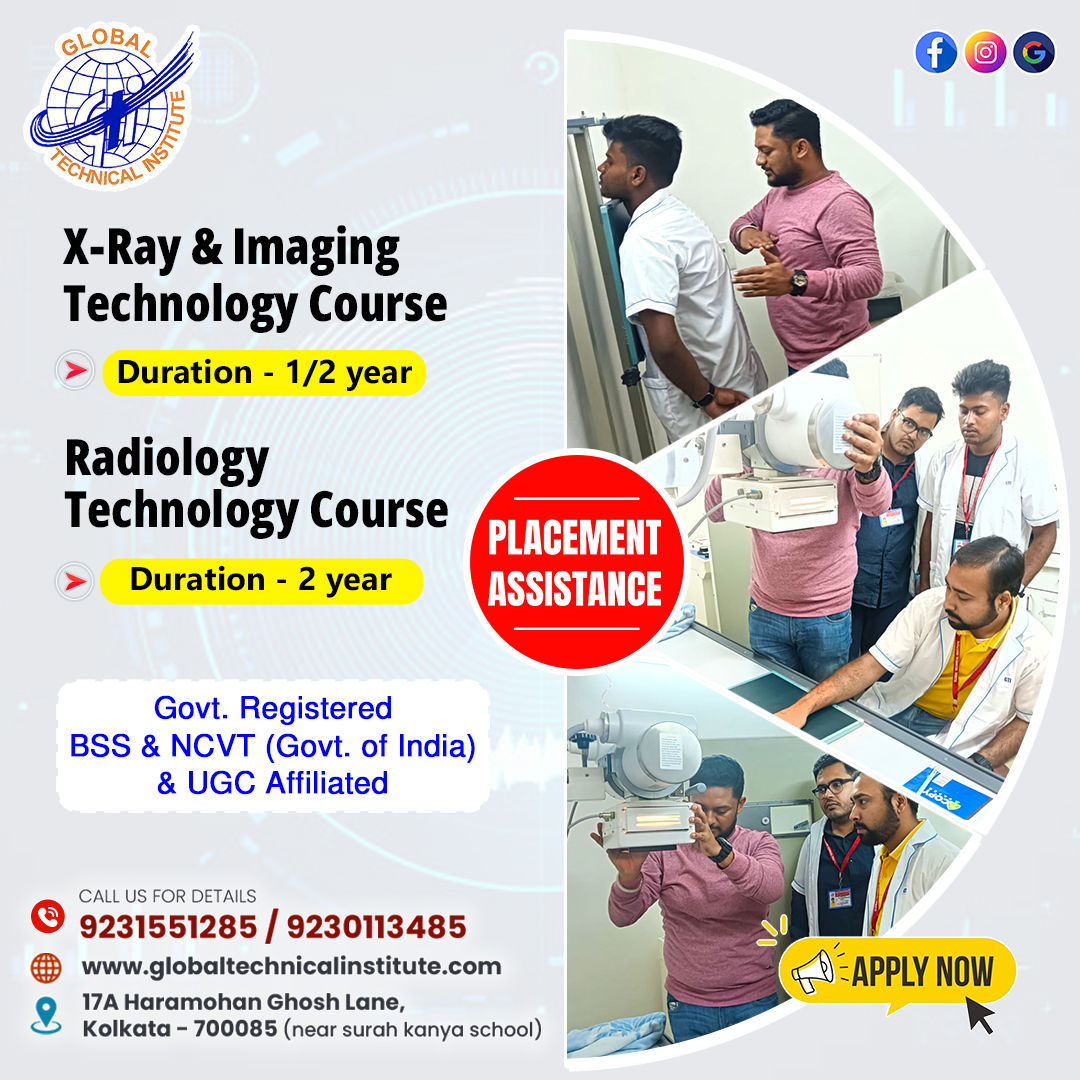
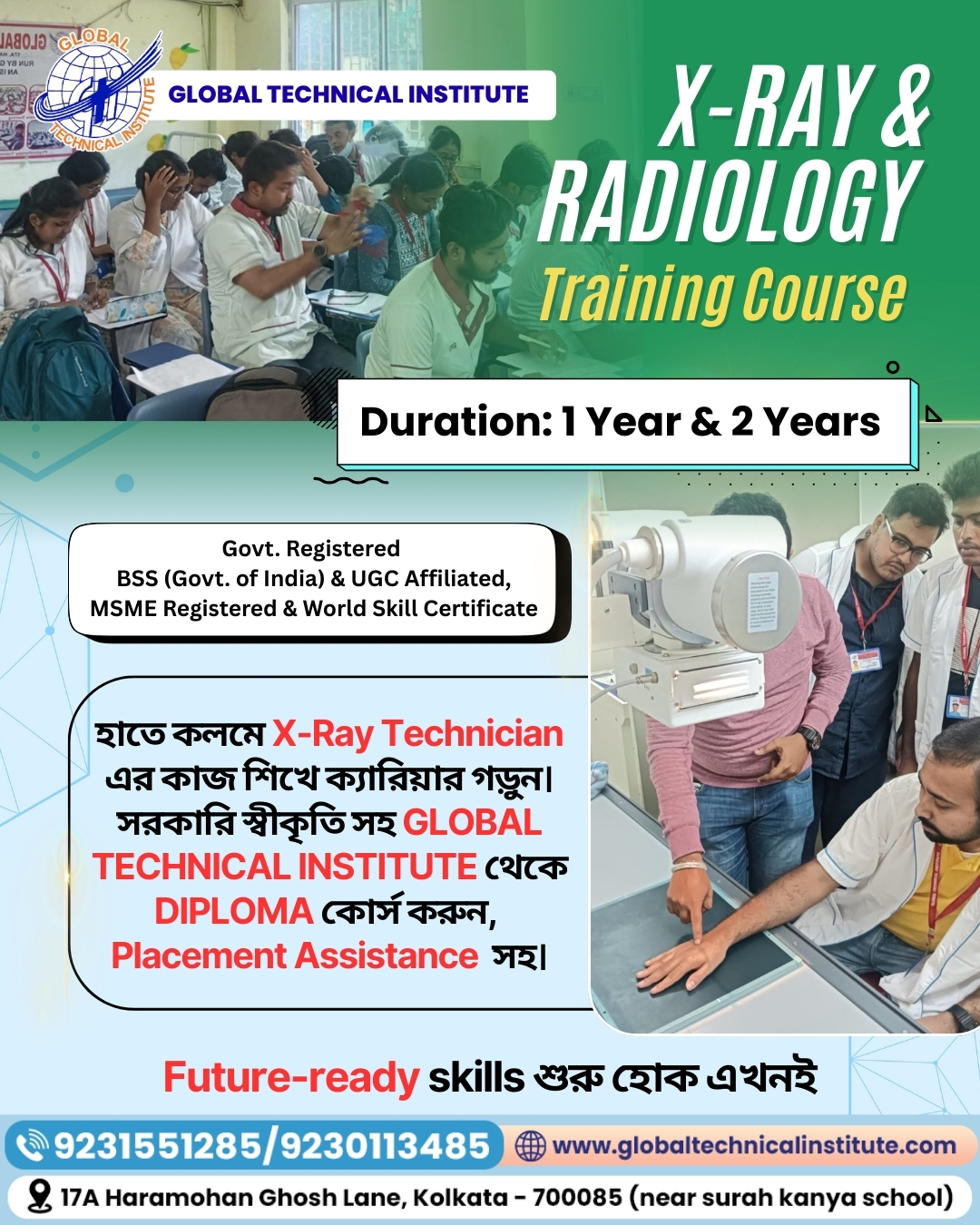
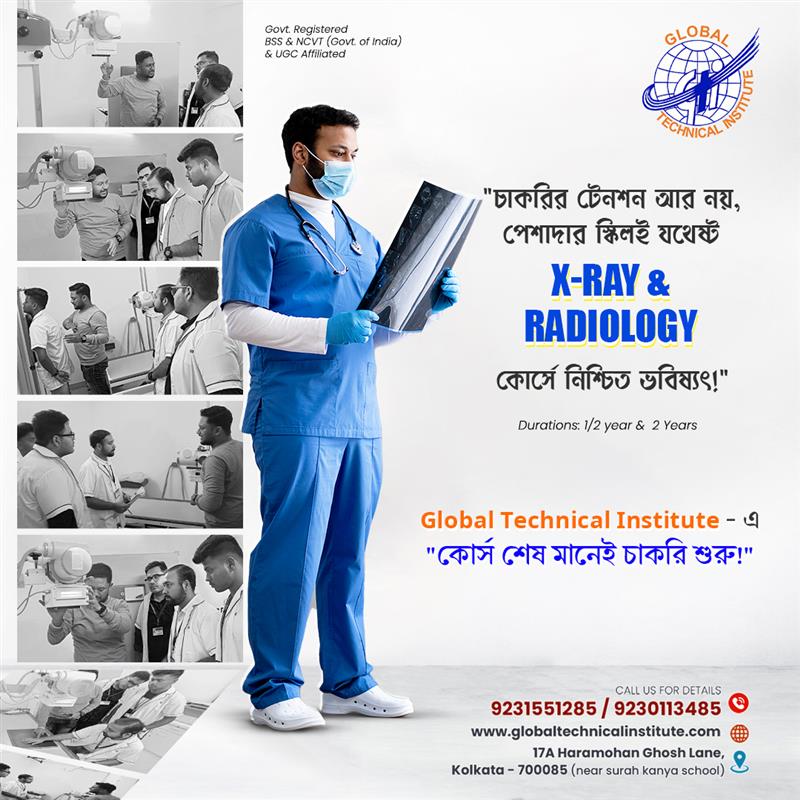
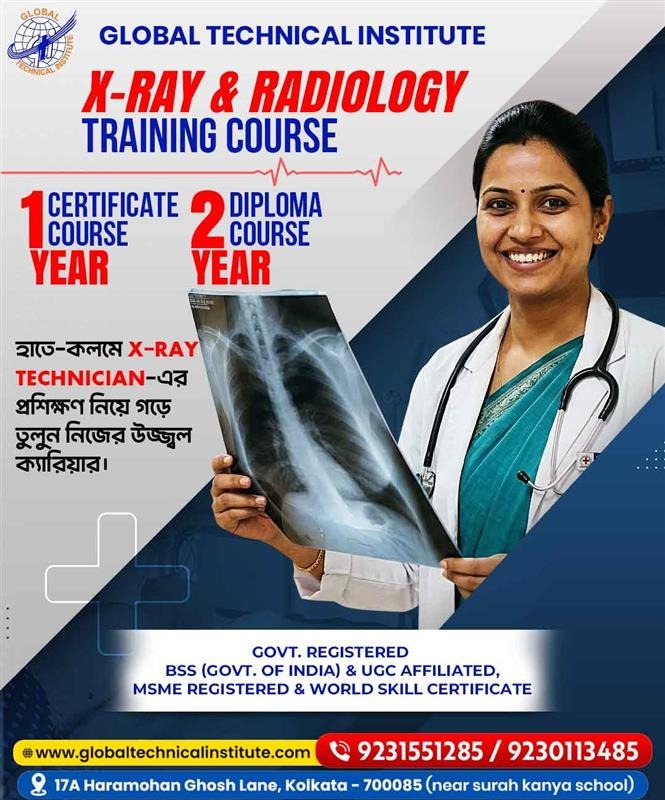
The Global Technical Institute website lists X-Ray & Imaging Technology and describes certificate and diploma options with stated one-year and two-year durations. It lists Higher Secondary as the minimum qualification and describes training in imaging principles, patient positioning, equipment handling and radiation safety. Course details can change, so contact the institute to confirm current eligibility, syllabus, practical arrangements, certificate issuer and the recognition applicable to your intended role.
Before paying fees, ask how students practise under supervision and how the programme addresses radiation safety. Confirm whether the course meets current requirements for the role you intend to pursue.
Career options and responsible practice
Depending on their qualification and employer requirements, trained personnel may seek roles in diagnostic imaging settings. Exact job titles, registration requirements and responsibilities vary. Students should compare current job advertisements and official guidance before assuming that a particular certificate is sufficient.
Professional practice requires accuracy, respect for patients, confidentiality and the ability to follow protocols. A responsible technician asks for help when uncertain, reports equipment problems and never bypasses safety procedures to save time.
Conclusion
X-ray technician work combines equipment knowledge, patient positioning, image quality and radiation safety. If you are comparing an X-Ray Technician Institute in Kolkata, prioritise practical supervision, safety training, qualification recognition and current regulatory requirements. Global Technical Institute lists X-Ray & Imaging Technology on its website; contact the institute and verify all course details before enrolling.
Frequently Asked Questions
What skills are important in X-ray technician training?
Students need equipment awareness, patient communication, positioning skills, image-quality checks, documentation and strong radiation-safety habits.
Why is patient positioning important in X-ray imaging?
Correct positioning helps show the required anatomy and can reduce avoidable repeat examinations.
Who regulates diagnostic X-ray safety in India?
The Atomic Energy Regulatory Board (AERB) provides regulatory information and radiation-safety guidance for diagnostic X-ray facilities.
Can students operate X-ray equipment without supervision?
No. Equipment must be operated by appropriately qualified and authorised personnel under applicable rules and facility procedures.
Does Global Technical Institute offer X-ray training?
The institute website lists X-Ray & Imaging Technology. Contact the institute to confirm current course details and the qualification’s scope.