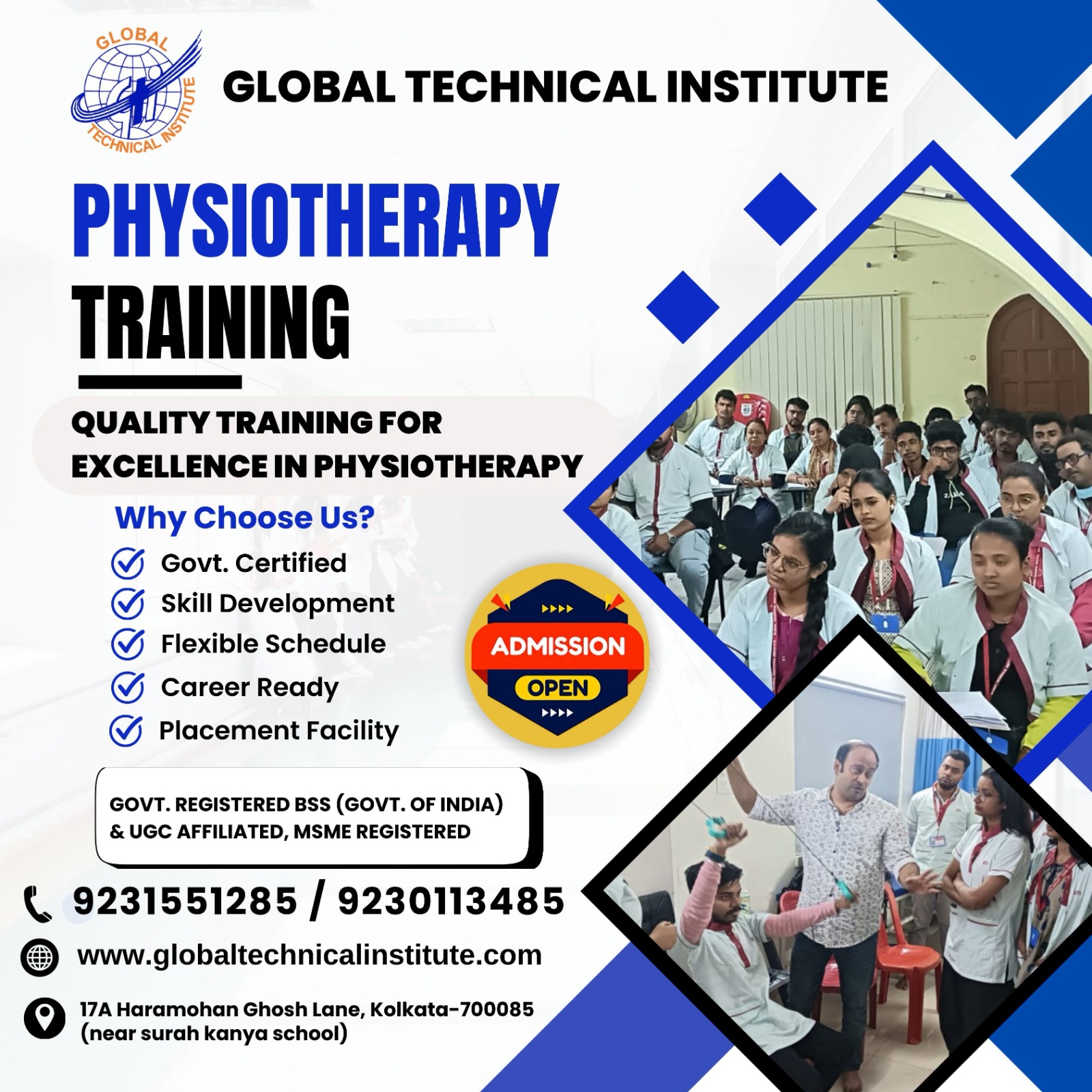
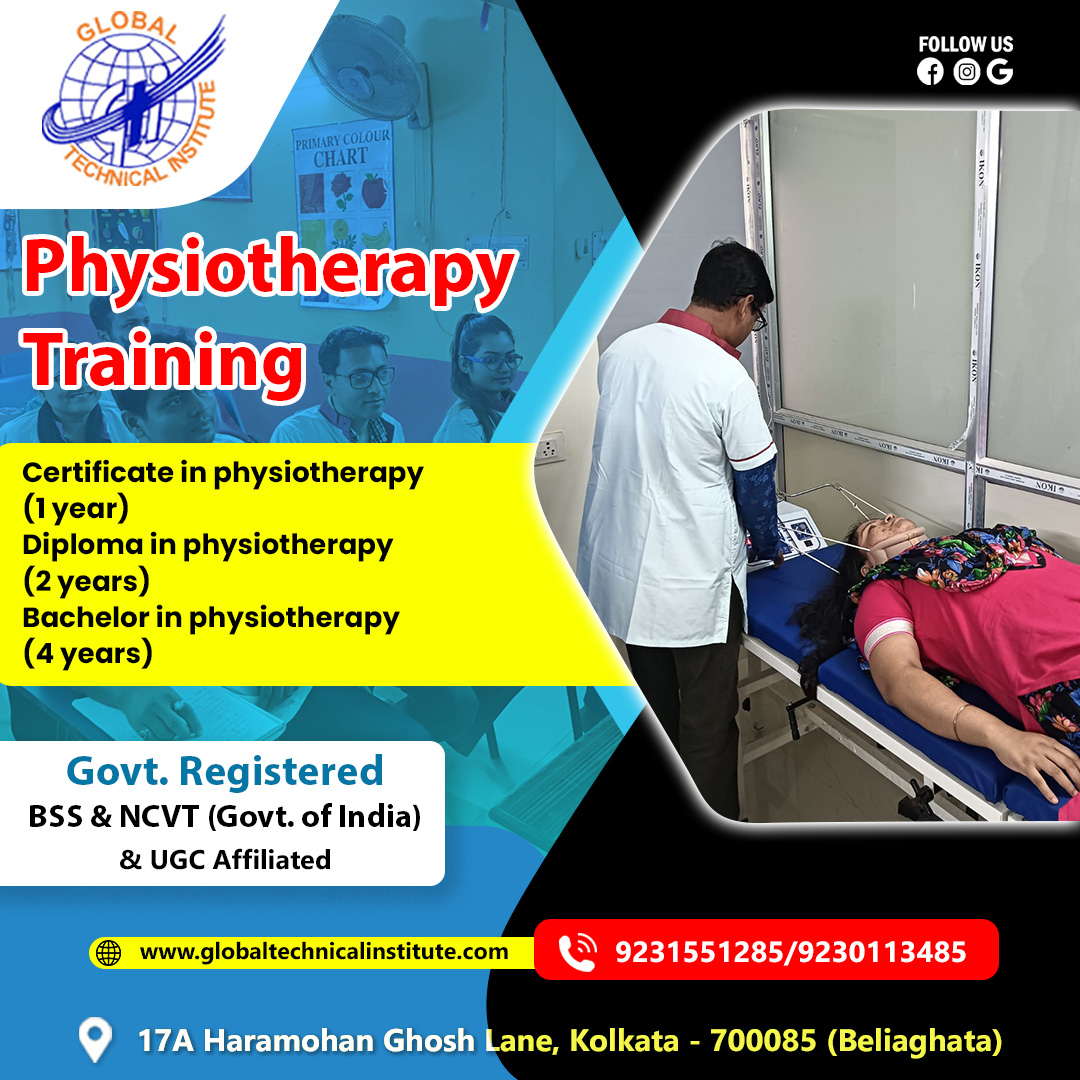
Physiotherapy Training in Kolkata
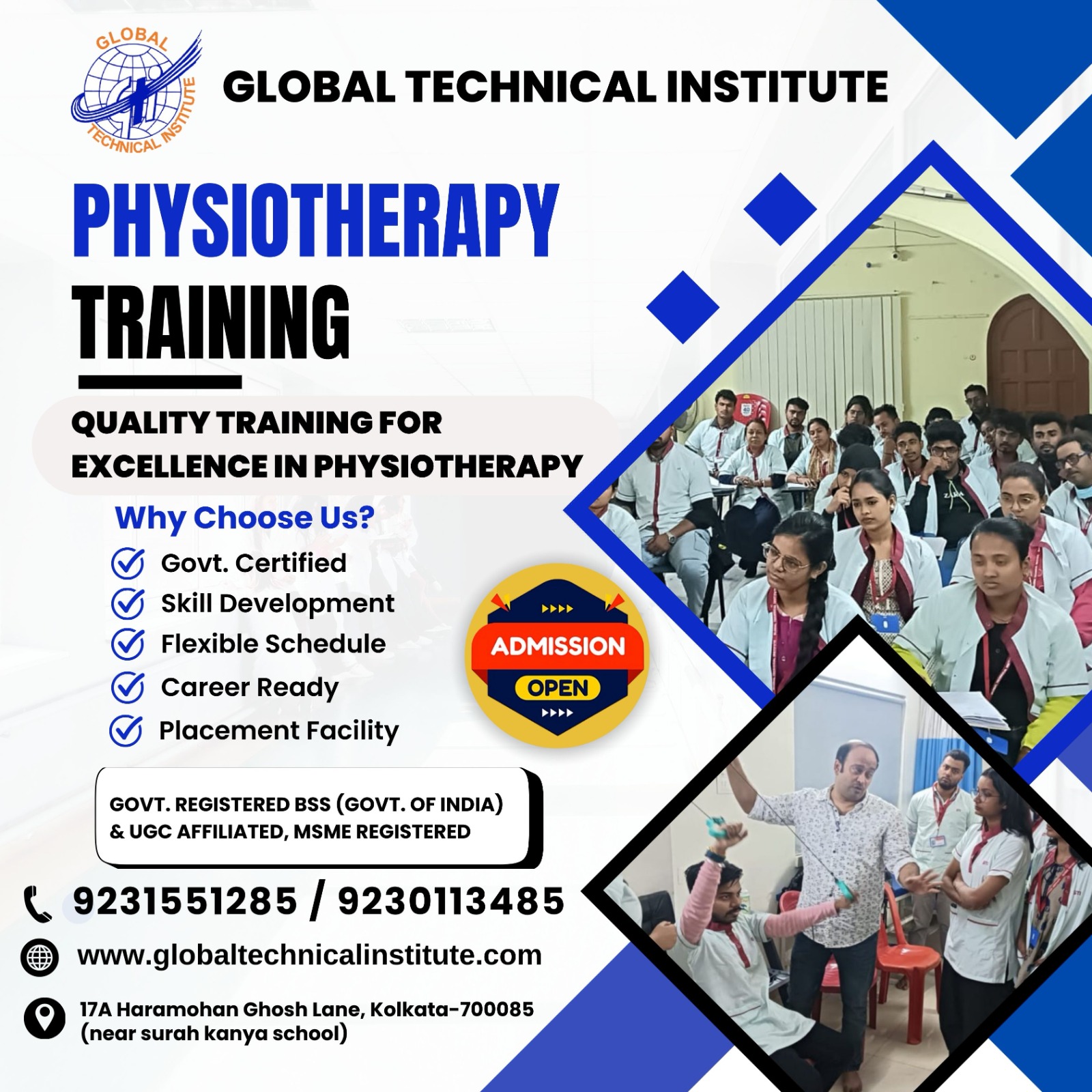
Are you interested in healthcare, human movement, rehabilitation and helping people recover from physical problems? If yes, physiotherapy may be a career option worth exploring.
Physiotherapy plays an important role in modern healthcare. It helps people manage pain, improve movement, recover after injuries and regain physical strength after illness or surgery. Physiotherapists work with patients of different ages, from children to older adults. They support people recovering from sports injuries, fractures, strokes, neurological conditions, joint problems and other physical limitations.
As healthcare services continue to develop, trained physiotherapy professionals and support staff are needed in hospitals, rehabilitation centres, clinics, sports facilities and other healthcare settings.
If you are searching for the Best Physiotherapy Training Institute in Kolkata, you should understand the available courses before taking admission. You should know the difference between a certificate course, a diploma programme and a recognised Bachelor of Physiotherapy (BPT) degree. You should also understand the eligibility criteria, course duration, fees, syllabus, practical training, admission process and career opportunities.
At Global Technical Institute, we believe students should receive clear information before selecting a training programme. In this guide, we explain the important details in simple language so that you can make an informed decision about your future.
1. What Is Physiotherapy?
Physiotherapy is a healthcare profession that focuses on human movement, physical function, pain management and rehabilitation. It uses different treatment methods to help people improve their ability to move and perform daily activities.
A physiotherapy programme may involve:
- Therapeutic exercises
- Movement and mobility training
- Strength and flexibility exercises
- Balance and coordination training
- Posture correction
- Physical modalities
- Functional rehabilitation
- Patient education
- Recovery support after injury or surgery
Physiotherapy is not limited to treating sports injuries. It is also used in orthopaedics, neurology, cardiopulmonary care, paediatrics, geriatrics and other areas of rehabilitation.
For example, a patient recovering from a knee operation may need exercises to improve joint movement and muscle strength. A person recovering from a stroke may need rehabilitation to improve balance, coordination and daily activities. A sportsperson may need a structured recovery programme after a muscle or ligament injury.
A qualified physiotherapist assesses the patient’s condition, identifies movement-related problems and prepares a suitable treatment plan within their professional scope.
2. Why Is Physiotherapy Important in Healthcare?
Physiotherapy supports people who experience pain, weakness, movement restrictions or physical difficulties. It can help patients improve their quality of life and participate more comfortably in daily activities.
Here are some important areas where physiotherapy plays a role.
2.1 Pain Management
Physiotherapy may help people manage certain types of back pain, neck pain, joint pain and muscle-related problems. Treatment can include exercise, movement education, manual techniques and other suitable methods.
2.2 Recovery After Surgery
Some patients need rehabilitation after orthopaedic or other surgeries. Physiotherapy can support recovery by helping them regain movement, strength, balance and functional ability.
2.3 Sports Injury Rehabilitation
Sportspersons may experience muscle strains, ligament injuries, joint problems and other physical conditions. Physiotherapy supports their recovery and helps them return to physical activity safely.
2.4 Neurological Rehabilitation
People affected by stroke, spinal cord injuries, cerebral palsy, Parkinson’s disease and other neurological conditions may need physiotherapy to improve movement, balance and functional independence.
2.5 Rehabilitation for Older Adults
Older adults may experience reduced strength, balance problems, joint stiffness and difficulty walking. Physiotherapy can help them maintain mobility and reduce the risk of falls.
2.6 Child Rehabilitation
Children with developmental or movement-related conditions may benefit from specialised paediatric physiotherapy.
2.7 Cardiopulmonary Rehabilitation
Physiotherapy may also support patients with certain heart and lung conditions. Rehabilitation programmes can include supervised exercise, breathing techniques and education, depending on the patient’s medical condition.
3. What Does a Physiotherapist Do?
A physiotherapist is a qualified healthcare professional who assesses physical function and provides appropriate rehabilitation within their scope of practice.
Common responsibilities include:
- Assessing a patient’s movement and physical function.
- Understanding the patient’s medical history and rehabilitation needs.
- Identifying movement limitations and functional problems.
- Preparing individual treatment plans.
- Teaching therapeutic exercises.
- Supporting strength, flexibility and balance training.
- Monitoring patient progress.
- Educating patients about posture and movement.
- Maintaining treatment records.
- Communicating with doctors and other healthcare professionals.
- Reviewing and modifying rehabilitation plans when needed.
A physiotherapist must understand the patient’s condition before selecting treatment methods. They must also recognise when a patient needs medical review or referral to another healthcare professional.
A physiotherapy assistant or technician may support a qualified physiotherapist with assigned tasks. However, a support-level qualification does not automatically provide the same professional scope as a recognised BPT degree.
4. Types of Physiotherapy Training Courses in Kolkata
Students may find different types of physiotherapy programmes in Kolkata. The course title, duration and certificate alone do not establish professional recognition.
Before choosing a programme, understand what qualification it awards and which professional roles it prepares students for.
4.1 Certificate in Physiotherapy Technology
A certificate course is generally a shorter programme that introduces students to basic physiotherapy concepts and support skills.
Depending on the syllabus, it may cover:
- Basic human anatomy
- Introduction to physiology
- Patient handling
- Basic therapeutic exercises
- Posture and movement
- Introduction to electrotherapy
- Rehabilitation equipment
- Patient care and safety
A certificate programme may be useful for learning introductory skills or preparing for certain support roles where the employer accepts that qualification.
However, students must understand that a short certificate is not automatically a professional physiotherapist qualification. It does not replace a recognised BPT degree.
4.2 Diploma in Physiotherapy
A diploma programme may provide more detailed training in anatomy, movement, therapeutic exercises, rehabilitation and basic physiotherapy techniques.
The exact syllabus and duration depend on the institution and awarding body.
Before enrolling, students should ask:
- What is the exact name of the diploma?
- Which organisation awards it?
- Is the programme approved or recognised for the advertised role?
- What is the official course duration?
- How many practical hours are included?
- Does it include supervised clinical training?
- What jobs can graduates legally and realistically apply for?
Do not assume that every programme called a Diploma in Physiotherapy has the same recognition or professional value.
4.3 Bachelor of Physiotherapy (BPT)
The Bachelor of Physiotherapy is the main undergraduate professional degree route for students who want to become physiotherapists.
The programme covers human anatomy, physiology, biomechanics, exercise therapy, electrotherapy, orthopaedics, neurology, cardiopulmonary physiotherapy and other clinical subjects.
It includes practical and clinical learning. Students are trained to assess patients, understand functional problems and develop rehabilitation plans under appropriate supervision.
The NCAHP framework has updated physiotherapy education standards and degree details. The 2026 national framework describes the B.PT programme as five years, including four years of academic study and one year of internship. Students should check the applicable university prospectus and current admission rules for their admission year.
4.4 Master of Physiotherapy (MPT)
A Master of Physiotherapy is a postgraduate programme for eligible graduates who want advanced knowledge in a particular area of physiotherapy.
Depending on the university and current degree structure, specialisation areas may include:
- Orthopaedic Physiotherapy
- Neurological Physiotherapy
- Cardiopulmonary Physiotherapy
- Sports Physiotherapy
- Paediatric Physiotherapy
- Other recognised specialisation areas
Students should check the current university admission requirements, available specialisations and degree nomenclature before applying.
4.5 Specialised Physiotherapy Skill Training
Some training centres may offer short courses or workshops in specific areas, such as:
- Therapeutic exercise
- Sports injury support
- Posture and movement
- Rehabilitation equipment
- Basic electrotherapy awareness
- Patient handling
- Mobility assistance
These courses can provide additional learning. They should not be confused with a recognised professional qualification unless the relevant authority confirms that status.
5. Difference Between Certificate, Diploma, BPT and MPT
Understanding the difference between these programmes is essential before admission.
| Course | Level | Main purpose |
| Certificate in Physiotherapy Technology | Short-term training | Introduction to basic concepts and support skills |
| Diploma in Physiotherapy | Diploma-level programme | Structured training as defined by the awarding body |
| Bachelor of Physiotherapy (BPT) | Undergraduate professional degree | Professional education and clinical preparation in physiotherapy |
| Master of Physiotherapy (MPT) | Postgraduate degree | Advanced study and specialisation after an eligible bachelor’s degree |
Important: A certificate or private diploma should not be advertised or understood as equivalent to a BPT degree unless the relevant authority has formally established that equivalence.
If your goal is to work independently as a professional physiotherapist, check the recognised BPT route and applicable registration requirements.
6. Eligibility for Physiotherapy Training in Kolkata
Eligibility depends on the course you choose. A short-term certificate programme may have different entry requirements from a recognised BPT degree.
6.1 Eligibility for Certificate Courses
Some certificate programmes may accept students who have completed Class 10 or Class 12. However, the exact requirement depends on the programme and awarding organisation.
Students should ask whether the certificate is intended for a support role, a skill-development purpose or a particular professional pathway.
6.2 Eligibility for Diploma Courses
Diploma eligibility varies by institution and awarding body. Some programmes may require Class 12, while others may publish different entry conditions.
Before applying, check the accepted subjects, minimum marks, age conditions and recognition of the qualification.
6.3 Eligibility for Bachelor of Physiotherapy (BPT)
The 2026 NCAHP degree and admission framework specifies the following entry requirements for B.PT:
- Completion of Class 12 or an equivalent Senior Secondary qualification.
- Physics, Chemistry and Biology, or Botany and Zoology.
- English as a required subject.
- A minimum aggregate of 50% in the relevant subjects for general and EWS candidates.
- A minimum of 40% for the specified reserved categories and PwD/PwBD candidates, subject to the applicable rules.
- Other medical fitness and admission conditions prescribed by the applicable curriculum and admission authority.
Students must check the latest official admission notice before applying because eligibility and entrance examination arrangements can change.
6.4 Can I Join Physiotherapy Training After Class 10?
Some basic certificate or skill-based programmes may accept Class 10 students. However, admission to a recognised BPT degree requires the prescribed Class 12 Science subjects and other eligibility conditions.
Students should not assume that completing a short-term course after Class 10 makes them eligible to practise as a professional physiotherapist.
6.5 Can Arts or Commerce Students Study Physiotherapy?
A student from Arts or Commerce should not assume they are eligible for the BPT degree. The prescribed BPT entry route requires the relevant Science subjects, including Physics, Chemistry and Biology.
Some private training programmes may publish different eligibility rules. Students must check what qualification those programmes award and what career roles they support.
7. Physiotherapy Course Duration
The duration depends on the programme and the awarding body.
| Programme | Duration |
| Certificate in Physiotherapy Technology | Depends on the institution and awarding body |
| GTI-published Certificate in Physiotherapy Technology | 6 months to 1 year |
| GTI-published Diploma in Physiotherapy | 2 years |
| Bachelor of Physiotherapy under the 2026 NCAHP framework | 5 years: 4 years of study + 1 year internship |
| Master of Physiotherapy | Depends on the current university and applicable programme structure |
Global Technical Institute’s published physiotherapy information lists a certificate programme of six months to one year, a two-year diploma programme and a four-year B.Sc. in Physiotherapy.
However, the current national degree framework describes the B.PT programme as five years, including the internship. Students should not treat a four-year private programme as equivalent to the recognised B.PT degree without verifying its awarding university and approval.
8. Subjects Covered in Physiotherapy Training
The subjects depend on the course level. A professional physiotherapy degree covers a much wider range of medical and clinical subjects than a short-term certificate.
The following are important areas of physiotherapy education.
8.1 Human Anatomy
Anatomy is the study of the structure of the human body.
Students learn about:
- Bones
- Muscles
- Joints
- Ligaments
- Tendons
- Nervous system
- Spine
- Upper and lower limbs
- Major organs
This knowledge helps students understand how the body moves and how injuries may affect physical function.
8.2 Human Physiology
Physiology explains how different systems of the body work.
Topics may include:
- Muscular system
- Nervous system
- Cardiovascular system
- Respiratory system
- Digestive system
- Endocrine system
- Blood circulation
- Basic exercise responses
8.3 Biomechanics and Kinesiology
Biomechanics studies the forces and movements involved in physical activity. Kinesiology focuses on human movement.
Students learn about posture, joint movement, muscle action, walking patterns and body mechanics.
8.4 Exercise Therapy
Exercise therapy is an important part of physiotherapy.
Students may learn about:
- Range-of-motion exercises
- Stretching exercises
- Strengthening exercises
- Balance training
- Coordination exercises
- Postural exercises
- Functional exercises
- Mobility training
Exercises must be selected according to the patient’s condition and professional assessment.
8.5 Electrotherapy
Electrotherapy involves the use of certain physical modalities in rehabilitation.
Depending on the programme, students may study:
- Transcutaneous Electrical Nerve Stimulation (TENS)
- Interferential Therapy (IFT)
- Therapeutic ultrasound
- Other electrical stimulation methods
- Basic safety and contraindications
Students must learn the purpose, safe use and limitations of each modality.
8.6 Orthopaedic Physiotherapy
Orthopaedic physiotherapy deals with movement and functional problems related to bones, joints, muscles and other structures.
Topics may include:
- Back and neck pain
- Joint stiffness
- Fracture rehabilitation
- Post-operative rehabilitation
- Sports-related musculoskeletal injuries
- Muscle weakness
- Movement limitations
8.7 Neurological Physiotherapy
Neurological physiotherapy supports patients with conditions affecting the brain, spinal cord and nerves.
Topics may include:
- Stroke rehabilitation
- Spinal cord injury
- Cerebral palsy
- Parkinson’s disease
- Balance and coordination problems
- Movement disorders
8.8 Cardiopulmonary Physiotherapy
This area focuses on rehabilitation for certain heart and lung conditions.
Students may learn about breathing exercises, respiratory care, exercise tolerance and basic cardiopulmonary rehabilitation principles.
8.9 Paediatric Physiotherapy
Paediatric physiotherapy focuses on the movement and development needs of children.
It may include learning about developmental milestones, movement difficulties and rehabilitation approaches for children with specific conditions.
8.10 Sports Physiotherapy
Sports physiotherapy focuses on injury prevention, rehabilitation and safe return to sporting activities.
Topics may include muscle injuries, joint injuries, movement assessment, exercise planning and sports-related rehabilitation.
8.11 Geriatric Physiotherapy
Geriatric physiotherapy focuses on the physical needs of older adults.
Students may learn about balance, walking, strength, joint movement, fall prevention and functional independence.
8.12 Clinical Practice and Professional Ethics
Students must learn how to communicate with patients, maintain records, protect patient privacy, follow safety rules and work with other healthcare professionals.
The exact subjects and practical requirements should be checked in the current curriculum of the institution awarding the qualification.
9. Practical Training in a Physiotherapy Course
Practical training is essential because physiotherapy involves working with people and understanding their physical needs.
Students should receive supervised practical exposure that matches their course level and permitted responsibilities.
9.1 Basic Patient Assessment
Students may learn how healthcare professionals collect patient information, understand movement difficulties and record relevant observations.
9.2 Posture Assessment
Students learn how posture is observed and how certain postural patterns may relate to movement or functional problems.
9.3 Range of Motion Assessment
Range of motion refers to the movement available at a joint. Students may learn how joint movement is observed and measured using appropriate methods.
9.4 Muscle Strength Assessment
Students may learn basic methods used to assess muscle strength and functional ability under supervision.
9.5 Therapeutic Exercise Practice
Practical sessions may cover stretching, strengthening, mobility, balance and coordination exercises.
9.6 Electrotherapy Equipment
Depending on the course and facility, students may learn about TENS, IFT, ultrasound and other equipment. They must understand safety precautions and contraindications before using any modality.
9.7 Patient Handling and Mobility Support
Students may learn safe methods for supporting patients during transfers, walking and basic movement activities.
9.8 Rehabilitation Equipment
Training may include learning about walking aids, exercise equipment, parallel bars, resistance bands and other rehabilitation tools.
9.9 Clinical Documentation
Students learn the importance of recording patient information, treatment sessions, progress and other relevant details.
9.10 Professional Communication
A physiotherapy professional must communicate clearly and respectfully with patients, family members and other healthcare staff.
Questions to ask before admission:
- How many practical hours are included?
- Which equipment is available?
- Are practical sessions conducted regularly?
- Are students supervised by qualified professionals?
- Is clinical training included?
- Where does the clinical training take place?
- Is there a practical logbook or assessment record?
Do not rely only on the words “hands-on training” in an advertisement. Ask for the actual practical schedule and training arrangements.
10. Internship and Clinical Exposure
Clinical exposure helps students understand how physiotherapy is provided in real healthcare settings.
For a recognised BPT programme, clinical training and internship are important parts of professional education. The current NCAHP framework emphasises adequate clinical training and internship.
A clinical internship may provide supervised exposure to areas such as:
- Orthopaedics
- Neurology
- Cardiopulmonary rehabilitation
- Paediatrics
- General medicine
- General surgery
- Sports rehabilitation
- Other clinical departments included in the curriculum
Students may observe patient assessment, assist with assigned activities, learn documentation and understand how rehabilitation plans are followed.
Before admission, ask the institution:
- Is the internship compulsory?
- Is it included in the official course structure?
- Which hospital or clinical facility provides the training?
- Is there a written training agreement?
- Who supervises students?
- How many hours or months are required?
- Is the internship recorded and assessed?
- Does the training meet the requirements of the awarding body?
A private training centre’s internship claim should be verified separately from the official clinical internship requirement of a recognised BPT degree.
11. Physiotherapy Course Admission Process in Kolkata
The admission process depends on the type of course.
Step 1: Decide Your Career Goal
First, decide whether you want to pursue a short-term support-level training programme or become a qualified physiotherapist through the BPT route.
This decision will help you choose the correct course.
Step 2: Check the Eligibility
Review the educational requirements. For BPT, check the prescribed Class 12 subjects, marks and current admission rules.
Step 3: Check the Institution and Awarding Body
Ask who issues the final qualification. For a degree programme, verify the university affiliation and relevant approvals.
For a certificate or diploma, ask for the exact awarding organisation and recognition details.
Step 4: Understand the Course Structure
Collect the syllabus, duration, class schedule, practical hours, internship details and examination method.
Step 5: Complete the Entrance Examination, If Required
For BPT admissions in West Bengal, WBJEEB lists Bachelor of Physiotherapy under JENPAS-UG. Students should follow the current year’s official information bulletin and counselling notices.
Step 6: Submit the Application
Complete the application form and submit the required documents according to the institution’s process.
Step 7: Confirm the Fees
Ask for a written fee structure. Check whether tuition, practical training, examinations, internship and certificate charges are included.
Step 8: Collect Admission Confirmation
After completing the admission process, collect the receipt, enrolment details, course information and written admission terms.
12. Documents Required for Physiotherapy Course Admission
The document checklist varies according to the course and institution.
Common documents may include:
- Class 10 marksheet and certificate
- Class 12 marksheet and certificate
- Passport-size photographs
- Valid photo identity proof
- Address proof
- Date of birth proof
- Entrance examination rank card, where applicable
- Counselling or allotment documents, where applicable
- Caste or category certificate, where applicable
- PwD/PwBD certificate, where applicable
- Medical fitness certificate, if required
- Transfer or migration certificate, if required
For BPT admission through the official West Bengal counselling route, students should follow the document instructions in the current counselling notice.
Always keep original documents and the required number of photocopies ready.
13. Physiotherapy Course Fees in Kolkata
Course fees are an important part of the admission decision. However, there is no single fixed fee for all physiotherapy programmes in Kolkata.
The total cost depends on the course type, awarding body, institution, facilities and training arrangements.
13.1 Factors That Affect Course Fees
The fee may depend on:
- Certificate, diploma or degree level
- Course duration
- University or awarding body
- Admission and enrolment charges
- Tuition fees
- Practical laboratory facilities
- Clinical training arrangements
- Examination charges
- Internship-related costs
- Study materials
- Equipment or consumable charges
- Hostel and transport facilities, where applicable
13.2 What Is the Fee at Global Technical Institute?
Global Technical Institute’s published physiotherapy information does not provide a confirmed total fee for each programme.
Students should contact the institute directly to request the latest written fee quotation for the certificate and diploma options.
13.3 What Should Be Included in the Fee?
Before admission, ask whether the quoted amount includes:
- Registration fee
- Admission fee
- Tuition fee
- Practical training fee
- Examination fee
- Study materials
- Internship charges
- Certificate or diploma charges
- Any additional compulsory charges
13.4 Is Instalment Payment Available?
Some institutions may offer instalment-based payment. Ask whether the facility is available and request the payment dates and conditions in writing.
13.5 Check the Refund Policy
Read the refund and cancellation policy before paying. Keep your payment receipt and a copy of the fee structure.
Our advice: Do not select a physiotherapy institute only because its fees are low. Compare the qualification, recognition, practical training, clinical exposure, faculty and total course cost.
14. Career Opportunities After Physiotherapy Training
Career opportunities depend on the qualification, professional recognition, practical experience and employer requirements.
A recognised BPT graduate may pursue professional physiotherapy roles after meeting the applicable requirements. A certificate or diploma graduate may be eligible for certain support roles where the employer accepts that qualification.
Some possible career areas are explained below.
14.1 Physiotherapist in Hospitals
Qualified physiotherapists may work in hospitals and support patients who need rehabilitation after injuries, surgeries or medical conditions.
14.2 Rehabilitation Centre Professional
Rehabilitation centres support patients with movement difficulties, physical disabilities and long-term recovery needs.
14.3 Orthopaedic Physiotherapy
This area focuses on musculoskeletal conditions such as joint problems, fractures, back pain and post-operative rehabilitation.
14.4 Neurological Physiotherapy
This area supports patients with neurological conditions that affect movement, balance and coordination.
14.5 Sports Physiotherapy
Sports physiotherapists work with athletes and active individuals who need injury management, rehabilitation and return-to-sport support.
14.6 Paediatric Physiotherapy
This area focuses on the movement and developmental needs of children.
14.7 Geriatric Physiotherapy
This area supports older adults with mobility, strength, balance and functional difficulties.
14.8 Cardiopulmonary Rehabilitation
Qualified professionals may work in settings that provide rehabilitation support for suitable heart and lung conditions.
14.9 Academic and Research Roles
With suitable higher qualifications and experience, professionals may explore teaching, research and academic opportunities.
14.10 Physiotherapy Support Roles
Candidates with suitable support-level qualifications may apply for roles such as physiotherapy assistant or rehabilitation support worker where the employer accepts their training.
The job title and responsibilities must match the candidate’s qualification and professional scope.
15. Where Can Physiotherapy Professionals Work?
Depending on their qualification and role, professionals may find opportunities in:
- Government hospitals
- Private hospitals
- Rehabilitation centres
- Physiotherapy clinics
- Sports academies
- Fitness and wellness facilities
- Orthopaedic centres
- Neurological rehabilitation centres
- Paediatric rehabilitation centres
- Elder care facilities
- Community health programmes
- Research and academic institutions
Students should check the qualification and registration requirements for each job. A short-term certificate may not qualify a person for every professional physiotherapy position.
16. Physiotherapy Salary in Kolkata
Salary is one of the most common questions among students. However, there is no fixed salary for every physiotherapy graduate or support worker.
Pay depends on several factors:
- Qualification
- Professional recognition
- Work experience
- Clinical skills
- Specialisation
- Employer
- Job responsibilities
- Location
- Working hours
- Additional training
A fresher may begin with an entry-level position. With experience, recognised qualifications and further specialisation, professionals may become eligible for more responsible roles.
Global Technical Institute’s published article mentions a starting salary range of ₹15,000 to ₹28,000 per month and higher earnings with experience. These figures are institute-published estimates, not a guaranteed salary or an independently verified market average. Students should compare current job advertisements before making financial plans.
Important: No institute should guarantee a particular salary simply because a student completes a course.
17. Skills Required to Build a Career in Physiotherapy
Physiotherapy requires scientific knowledge, practical ability and good communication.
17.1 Interest in Human Anatomy
Students should be interested in understanding the human body, muscles, bones, joints and movement.
17.2 Communication Skills
Physiotherapists work closely with patients. They must explain exercises, understand patient concerns and communicate clearly.
17.3 Patience and Empathy
Recovery can take time. Patients may need regular support and encouragement. Patience and empathy are important qualities.
17.4 Observation Skills
Professionals need to observe posture, movement, balance and functional ability carefully.
17.5 Practical Skills
Students should develop the ability to follow safe procedures and perform assigned practical activities correctly.
17.6 Problem-Solving Ability
Every patient has different needs. Professionals must understand the problem and follow suitable treatment plans within their scope.
17.7 Professional Ethics
Patient privacy, informed consent, safety and respectful behaviour are essential in healthcare.
17.8 Continuous Learning
Medical knowledge and rehabilitation methods continue to develop. Professionals should keep learning and update their skills.
18. How to Choose the Best Physiotherapy Training Institute in Kolkata
Choosing the right institute is one of the most important decisions for your career.
Do not select a training centre only because its advertisement uses words such as “best”, “top”, “government approved” or “100% placement”.
Check the following points before admission.
18.1 Verify the Qualification
Ask for the exact course name and final qualification. Find out whether it is a certificate, diploma or university degree.
18.2 Check the Awarding Body
Confirm which organisation or university issues the final certificate or degree.
For a BPT programme, verify the university affiliation and relevant regulatory requirements.
18.3 Verify Course Recognition
Ask for documentary evidence of approval or recognition for the exact course and academic session.
An ISO certificate or general training affiliation does not automatically prove that a professional physiotherapy qualification is recognised.
18.4 Review the Syllabus
Collect the complete syllabus. Check whether it includes relevant theory, practical learning, clinical training and assessment.
18.5 Check Practical Facilities
Visit the institute if possible. Ask which equipment students can use and how practical sessions are conducted.
18.6 Ask About Clinical Training
Find out whether students receive supervised clinical exposure. Ask where the training takes place and how it is documented.
18.7 Check Faculty Qualifications
Ask about the academic and professional background of the trainers. Clinical physiotherapy subjects should be taught by suitably qualified professionals.
18.8 Understand Examination and Certification
Ask who conducts the examinations and who issues the final qualification.
18.9 Check Placement Support
If the institute offers placement assistance, ask what support is actually provided.
It may include interview preparation, career guidance, job referrals or employer connections. Placement support should not be confused with a guaranteed job.
18.10 Compare the Total Fee
Ask for a written fee structure and check all compulsory charges.
18.11 Read the Admission Terms
Understand the attendance requirements, examination rules, refund policy and certificate conditions before paying.
19. Why Consider Global Technical Institute for Physiotherapy Training in Kolkata?
Global Technical Institute offers physiotherapy training in Kolkata for students interested in learning about rehabilitation, patient care and physiotherapy-related skills.
According to the institute’s published physiotherapy information, the available programme descriptions include:
| Course option published by GTI | Published duration | Published entry information |
| Certificate in Physiotherapy Technology | 6 months to 1 year | Class 10 or Class 12 pass |
| Diploma in Physiotherapy | 2 years | Class 12 pass |
| B.Sc. in Physiotherapy | 4 years | Undergraduate programme |
The institute’s published article also discusses subjects and skills such as anatomy, biomechanics, electrotherapy, therapeutic exercises, manual techniques, neurological rehabilitation, sports injury support, patient communication and documentation.
19.1 Physiotherapy Course Options
GTI’s published page lists certificate, diploma and B.Sc. programme descriptions. Students should contact the institute to confirm which programmes are currently open for admission and the exact awarding body for each one.
19.2 Practical Skills and Equipment
The published information describes learning areas such as therapeutic exercises, electrotherapy equipment, rehabilitation methods and patient handling.
Before admission, students should visit the training facility and confirm the actual equipment available, practical schedule and supervision arrangements.
19.3 Internship and Clinical Exposure
GTI’s published page describes clinical internship exposure across areas such as orthopaedics, neurology, paediatrics and sports rehabilitation.
Students should request the written internship details, including the training facility, duration, supervision, assessment and whether the arrangement applies to their chosen course.
19.4 Faculty and Student Support
The institute’s published information describes experienced faculty and career support. Students should ask about the qualifications of the faculty members who will teach their selected programme.
19.5 Certification and Recognition
GTI’s published page describes its physiotherapy certification as government-recognised. Students should request the exact approval or affiliation documents for the course they plan to join.
A general claim of recognition is not enough. Students should verify the issuing authority, course title, validity and scope of the qualification.
A short certificate or private diploma should not be treated as equivalent to a recognised BPT degree without documentary proof of the relevant recognition or equivalence.
19.6 Placement Support
The institute’s page mentions placement support. Students should ask what the placement process includes, which employers participate and whether any placement figures relate specifically to the physiotherapy programme.
Placement support does not mean that every student is guaranteed a job.
19.7 Admission Enquiry
Students interested in physiotherapy training can contact Global Technical Institute to ask about current batches, eligibility, course details, fees and admission requirements.
Name: Global Technical Institute – Physiotherapy Training Centre in Kolkata
Address: 17A, Hara Mohan Ghosh Ln, Phool Bagan, Beleghata, Kolkata, West Bengal 700085
Phone number: 8961008489
Map:
We recommend visiting the institute and collecting written course information before taking admission.
20. BPT Admission in West Bengal: What Students Should Know
Students who want to pursue a recognised Bachelor of Physiotherapy degree in West Bengal should understand the official admission route.
The West Bengal Joint Entrance Examinations Board (WBJEEB) lists B.P.T. among the undergraduate courses covered by JENPAS-UG.
The general admission process includes:
- Check the official JENPAS-UG notification for the relevant academic year.
- Read the BPT eligibility requirements.
- Complete the online application within the notified dates.
- Appear for the entrance examination, if required under the current admission rules.
- Check the result and rank card.
- Participate in counselling.
- Review the available institutes and seat matrix.
- Complete document verification and admission at the allotted institute.
The entrance examination and counselling rules may change. Always follow the latest WBJEEB and university notices.
21. Can You Become a Physiotherapist After a Short-Term Course?
This is an important question.
A short-term certificate or private diploma may teach basic physiotherapy-related concepts or prepare a student for certain support roles. However, it does not automatically qualify the student to practise as a professional physiotherapist.
A recognised BPT degree follows a defined academic and clinical training structure. It prepares students for professional physiotherapy responsibilities, subject to applicable registration and regulatory requirements.
Before enrolling in any short-term programme, ask:
- What is the exact qualification?
- Who awards it?
- Is it recognised for the job I want?
- Does it permit independent professional practice?
- What are the limits of the role?
- Can I progress to a recognised degree later?
- Is the claimed equivalence documented?
Do not rely only on a course advertisement or verbal promise. Ask for official documents.
22. Future Scope of Physiotherapy
Physiotherapy has an important role in rehabilitation and healthcare. People may need physiotherapy after injuries, surgeries, neurological conditions and other physical problems.
Some areas of continued development include:
- Sports injury rehabilitation
- Neurological rehabilitation
- Orthopaedic rehabilitation
- Geriatric care
- Paediatric rehabilitation
- Cardiopulmonary rehabilitation
- Community-based rehabilitation
- Digital rehabilitation support
- Research and evidence-based practice
Technology is also influencing rehabilitation. Digital records, movement assessment tools and selected rehabilitation technologies are becoming part of modern healthcare settings.
However, technology does not replace professional knowledge. Physiotherapists need to understand patient conditions, assess movement, select suitable treatment and monitor progress.
Students who want to build a long-term career should focus on recognised qualifications, supervised clinical experience, professional ethics and continuous learning.
23. Frequently Asked Questions About Physiotherapy Training in Kolkata
Q1. Which is the best physiotherapy training institute in Kolkata?
The best institute depends on your career goal, qualification requirement, practical training needs and budget. Check the awarding body, course recognition, syllabus, faculty, clinical exposure and fees before admission. Global Technical Institute offers physiotherapy training options in Kolkata.
Q2. What is physiotherapy training?
Physiotherapy training teaches students about human movement, anatomy, exercise therapy, rehabilitation, patient care and other physiotherapy-related subjects. The exact training depends on whether the programme is a certificate, diploma or degree.
Q3. What are the physiotherapy training courses available in Kolkata?
Students may find certificate courses, diploma programmes, Bachelor of Physiotherapy (BPT) and Master of Physiotherapy (MPT) programmes. The qualification and recognition of each course must be checked separately.
Q4. Can I study physiotherapy after Class 10?
Some certificate or skill-based programmes may accept Class 10 students. However, the recognised BPT degree route requires the prescribed Class 12 Science subjects and other eligibility conditions.
Q5. Can I study BPT after Class 12?
Yes, students who meet the prescribed Class 12 subject, marks and admission requirements can apply for BPT. The current admission rules should be checked with the relevant authority.
Q6. Is Biology compulsory for BPT?
The 2026 NCAHP B.PT admission framework specifies Physics, Chemistry and Biology or Botany and Zoology, along with English. Students should check the current official admission notice.
Q7. Can Arts or Commerce students become physiotherapists?
Arts or Commerce students do not meet the standard BPT subject requirement unless they fulfil the prescribed Science eligibility through an accepted route. Some private skill courses may have different entry conditions, but these are not automatically equivalent to BPT.
Q8. What is the duration of a physiotherapy course?
Duration depends on the qualification. GTI publishes a six-month to one-year certificate option and a two-year diploma option. The 2026 national B.PT framework describes five years, including one year of internship.
Q9. What is the duration of BPT in India?
The current 2026 NCAHP degree framework describes B.PT as five years, including four years of academic study and one year of internship. Students should verify the applicable university and admission-year rules.
Q10. What is the difference between BPT and a Diploma in Physiotherapy?
BPT is an undergraduate professional degree with a defined academic and clinical training structure. A diploma is a separate qualification whose recognition and professional scope depend on the awarding body and applicable rules.
Q11. What subjects are taught in physiotherapy?
Common subjects include anatomy, physiology, biomechanics, exercise therapy, electrotherapy, orthopaedics, neurology, cardiopulmonary rehabilitation and clinical practice. The syllabus depends on the programme.
Q12. Does physiotherapy training include practical classes?
A structured physiotherapy programme should include practical learning. Ask about practical hours, equipment, supervision and clinical exposure before admission.
Q13. Is an internship compulsory for BPT?
The current national B.PT framework includes a one-year internship. Students should follow the exact curriculum and internship requirements of their university and admission year.
Q14. What is the fee for physiotherapy training in Kolkata?
Fees vary according to the course, institution, awarding body and practical facilities. GTI’s published physiotherapy page does not provide a confirmed total fee for each programme. Contact the institute for a written fee quotation.
Q15. Can I pay physiotherapy course fees in instalments?
Instalment options depend on the institution. Ask the admission office about payment schedules and additional charges.
Q16. What documents are required for physiotherapy admission?
Common documents include Class 10 and Class 12 marksheets, certificates, photographs, identity proof, address proof and entrance examination or counselling documents where applicable.
Q17. What jobs can I get after physiotherapy training?
Depending on the qualification, possible roles include physiotherapy assistant, rehabilitation support worker and other support positions. Professional physiotherapist roles require the appropriate recognised qualification and applicable professional requirements.
Q18. Can I work in a hospital after completing a physiotherapy course?
You may apply for suitable hospital roles if your qualification meets the employer’s requirements. Some professional positions require a recognised BPT degree and other applicable conditions.
Q19. Can I open my own physiotherapy clinic after a certificate course?
A short-term certificate does not automatically qualify a person to practise independently as a professional physiotherapist. Check the current professional requirements before planning to open or operate a clinic.
Q20. What is the salary of a physiotherapist in Kolkata?
Salary depends on qualification, experience, specialisation, employer and job responsibilities. Students should compare current job advertisements and avoid relying on guaranteed salary promises.
Q21. What is the difference between a physiotherapist and a physiotherapy assistant?
A physiotherapist is a qualified professional who assesses patients and plans rehabilitation within their scope. A physiotherapy assistant supports assigned activities under appropriate supervision. Their qualifications and responsibilities are different.
Q22. Is physiotherapy a good career option?
Physiotherapy may be a suitable career for students interested in healthcare, movement, rehabilitation and patient support. Students should consider the academic requirements, clinical responsibilities and long-term career goals before choosing it.
Q23. What equipment is used in physiotherapy?
Depending on the clinical setting, equipment may include exercise mats, resistance bands, parallel bars, walking aids, TENS units, IFT machines, ultrasound therapy equipment and other rehabilitation tools.
Q24. Is government recognition important for a physiotherapy course?
Yes. Students should verify the awarding body and approval or recognition of the exact course. A general affiliation or ISO certification does not automatically establish recognition as a professional physiotherapy qualification.
Q25. Does Global Technical Institute offer physiotherapy training?
Yes. Global Technical Institute publishes physiotherapy training information, including certificate and diploma programme descriptions. Students should contact the institute to confirm current availability and exact qualification details.
Q26. What is the duration of the physiotherapy certificate course at GTI?
GTI’s published page lists the Certificate in Physiotherapy Technology as six months to one year. Confirm the current batch and course structure directly with the institute.
Q27. Does GTI offer a Diploma in Physiotherapy?
GTI’s published information lists a two-year Diploma in Physiotherapy. Students should request details of the awarding body, recognition, syllabus and practical training before admission.
Q28. Does GTI provide internship support?
GTI’s published page describes clinical internship exposure. Students should confirm the actual internship arrangement for their chosen programme, including the facility, duration and supervision.
Q29. When should I take admission for physiotherapy training?
Admission dates depend on the programme and institution. For BPT, follow the official JENPAS-UG and counselling schedule where applicable. For GTI’s training programmes, contact the institute for current batch information.
Q30. How can I contact Global Technical Institute?
You can contact Global Technical Institute at 9231551285, 9230113485 or 8961008489. The institute is located at 17A, Hara Mohan Ghosh Lane, Beliaghata, Kolkata – 700085. Website:
24. Final Checklist Before Taking Admission
Before choosing a physiotherapy training institute in Kolkata, check the following points:
- I understand the difference between a certificate, diploma and BPT degree.
- I have checked the eligibility requirements.
- I know the exact name of the qualification.
- I have verified the awarding body.
- I have checked the course-specific approval or recognition.
- I have received the complete syllabus.
- I understand the course duration.
- I know the number of practical hours.
- I have checked the equipment and training facilities.
- I understand the clinical training arrangements.
- I have checked the internship requirements.
- I have received a written fee structure.
- I have checked examination and certificate charges.
- I have read the refund policy.
- I understand which jobs I can apply for after the course.
Conclusion
Physiotherapy is an important healthcare field that helps people improve movement, manage physical difficulties and recover their functional abilities. It offers different learning pathways, from introductory skill training to professional degree-level education.
If you are looking for the Best Physiotherapy Training Institute in Kolkata, do not make your decision only on the basis of course duration or fees. First, understand your career goal. Then compare the course type, eligibility, syllabus, awarding body, recognition, practical training, internship and career opportunities.
At Global Technical Institute, we encourage students to understand all course details before admission. Our published physiotherapy information includes certificate and diploma programme options, along with training areas such as anatomy, exercise therapy, electrotherapy and rehabilitation.
Students should contact the institute to confirm the current course availability, exact qualification, awarding body, fee structure and clinical training arrangements.
Choose a programme that matches your education and long-term career plans. Build your knowledge, develop practical skills and take an informed step towards a future in healthcare.
Read More: Physiotherapy Training for Beginners: Everything Students Should Know